

How to Choose Adhesive Bandages?
How to Choose Adhesive Bandages?
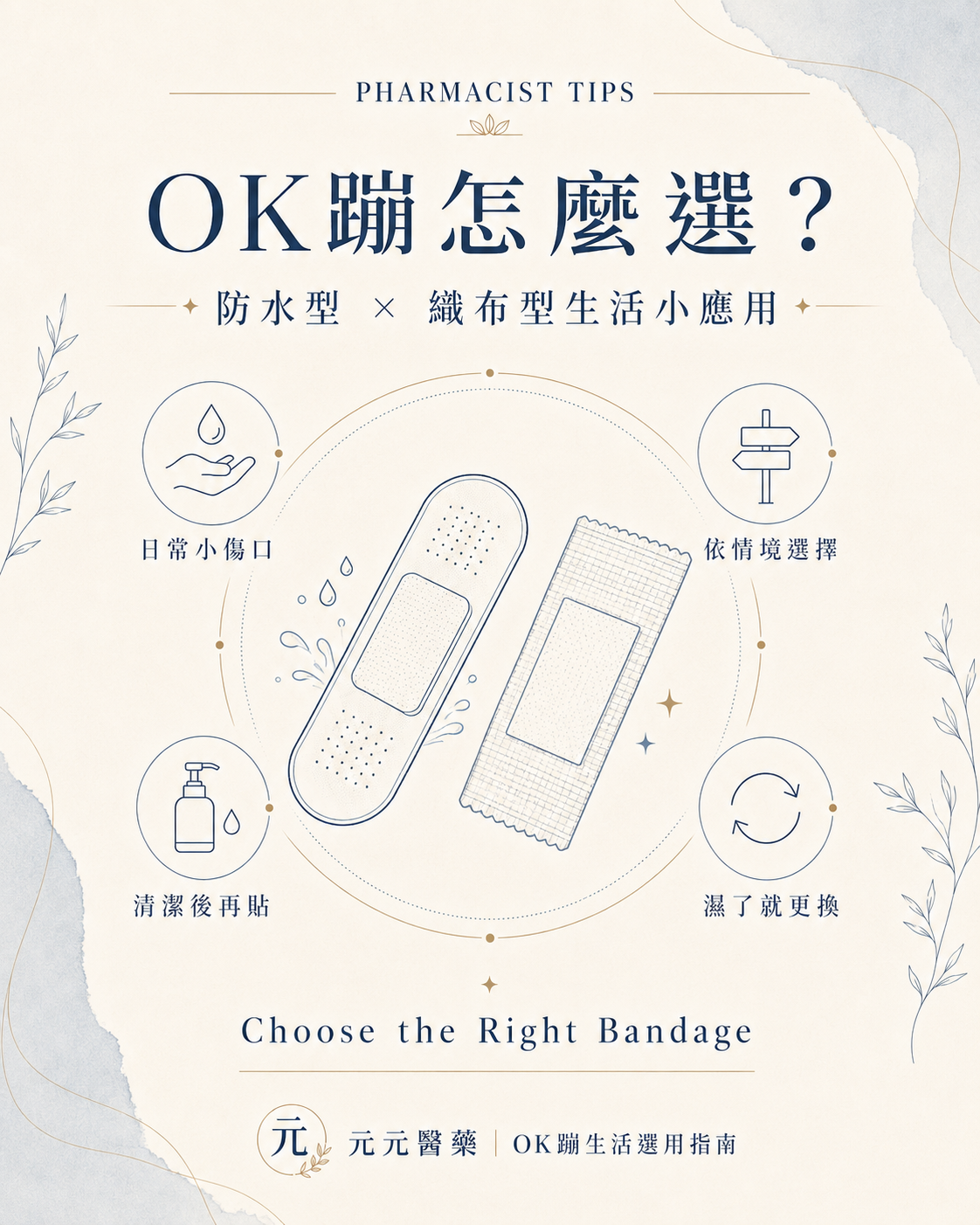
Adhesive bandages are the most common item in home first-aid kits, but not every wound is suitable for the same type. Bandages common in daily life can be roughly divided into waterproof, fabric, regular size, and wide size. Choosing the right style ensures minor wounds are fitted more snugly and kept cleaner, reducing the chances of affecting protection due to friction, water exposure, or lifting edges.
3 Steps to Remember Before Applying a Bandage
For minor cuts and scrapes, it is recommended to do basic cleaning and bleeding control before covering them with a bandage. General wound care principles include washing hands, stopping blood flow, cleaning the wound, and then covering it with a clean dressing or bandage to help reduce exposure to dirt.
Prevent dirt on your hands from contacting the wound.
Rinse surface dirt away with clean water or normal saline.
If the skin around the wound is too wet, the bandage will lift or fall off easily.
Waterproof vs. Fabric Bandages: What's the Difference?
Waterproof Bandages: Ideal for Minor Wounds Exposed to Water
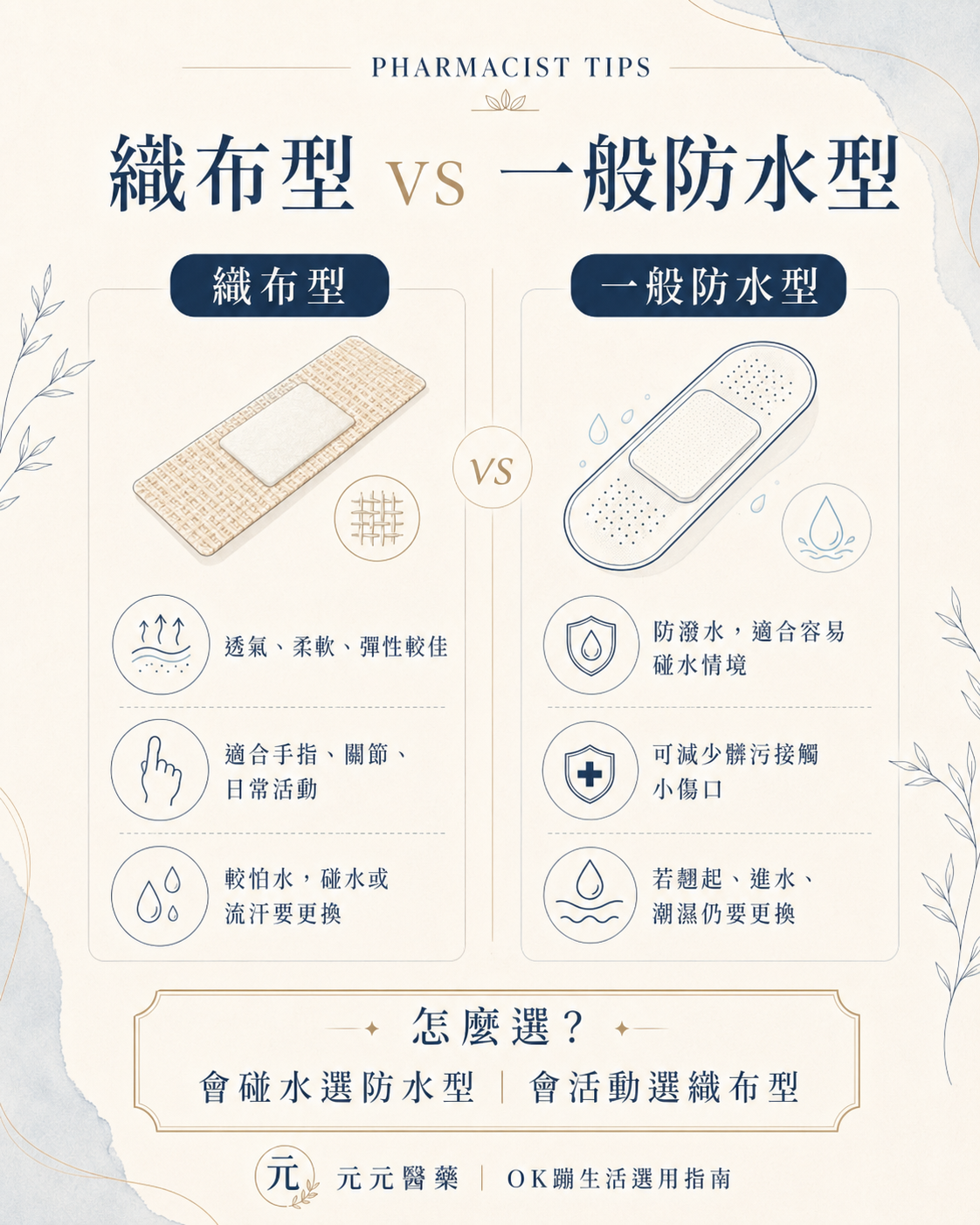
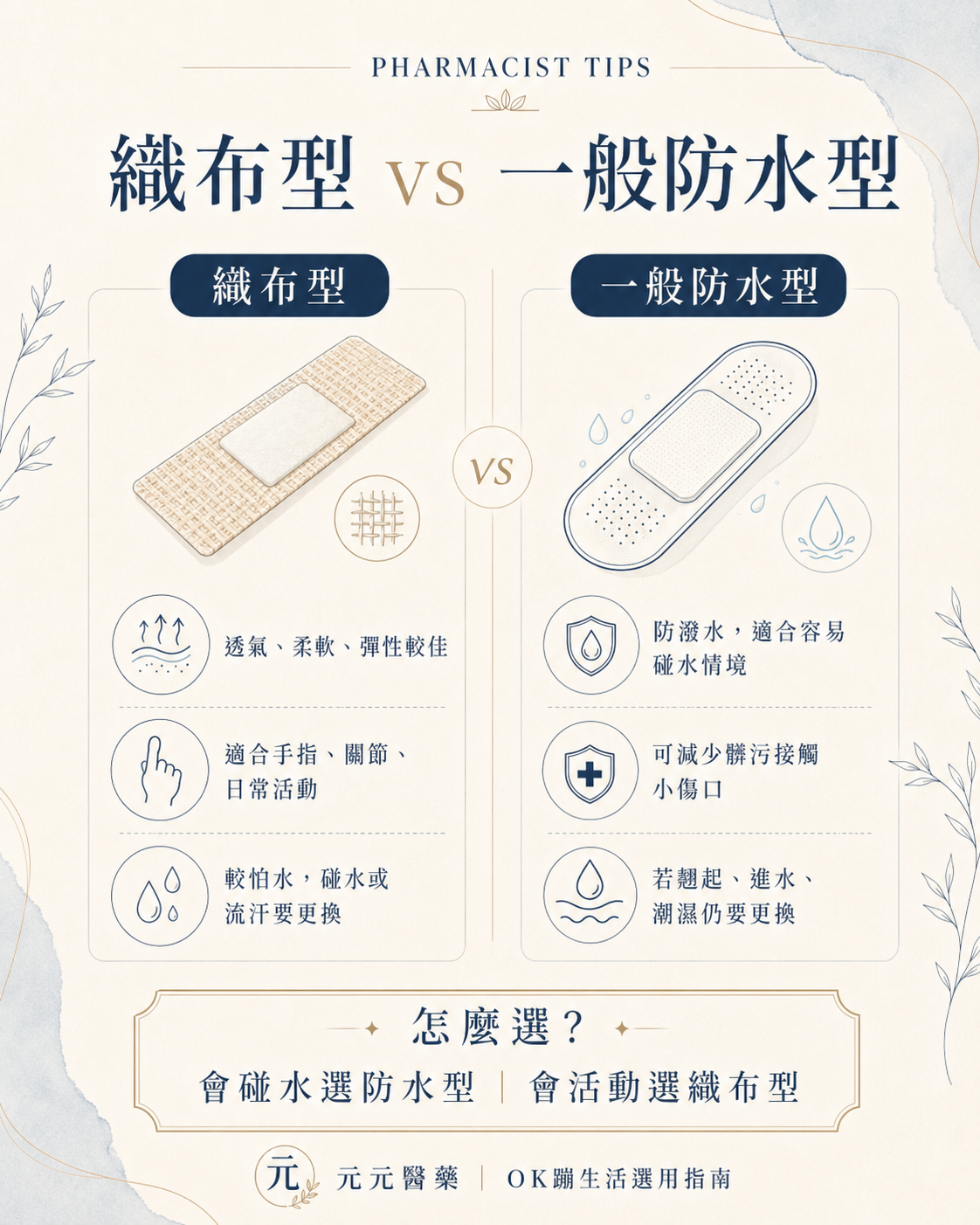
Waterproof bandages are ideal for scenarios where your wound may briefly come into contact with water, such as washing hands, doing chores, cleaning, or keeping dust and dirt away when outdoors. They reduce external irritation from moisture and grime, but they must be replaced if the edges peel, the inside gets damp, or they lose adhesion.
- Best for: Minor finger cuts, light scrapes on the back of hands, or wounds prone to water contact.
- Advantages: Water-resistant, keeps dirt out, ideal for temporary daily protection.
- Reminder: Check for water seepage or loose edges after taking a shower or heavy water exposure.
Fabric Bandages: Best for High-Movement, Contoured Areas
Fabric bandages are typically softer, more breathable, and stretchier, making them perfect for highly active areas like fingers, joints, elbows, and knees. If a wound sits on a bendable or high-friction area, fabric adheres much better than stiffer plastic alternatives.
- Best for: Fingers, joints, backs of hands, knees, elbows, and preventing shoe chafing on heels.
- Advantages: Soft, conforming, excellent elasticity, avoids restrictive movement.
- Reminder: Fabric absorbs water easily; change it promptly when exposed to water, sweat, dirt, or if it lifts.
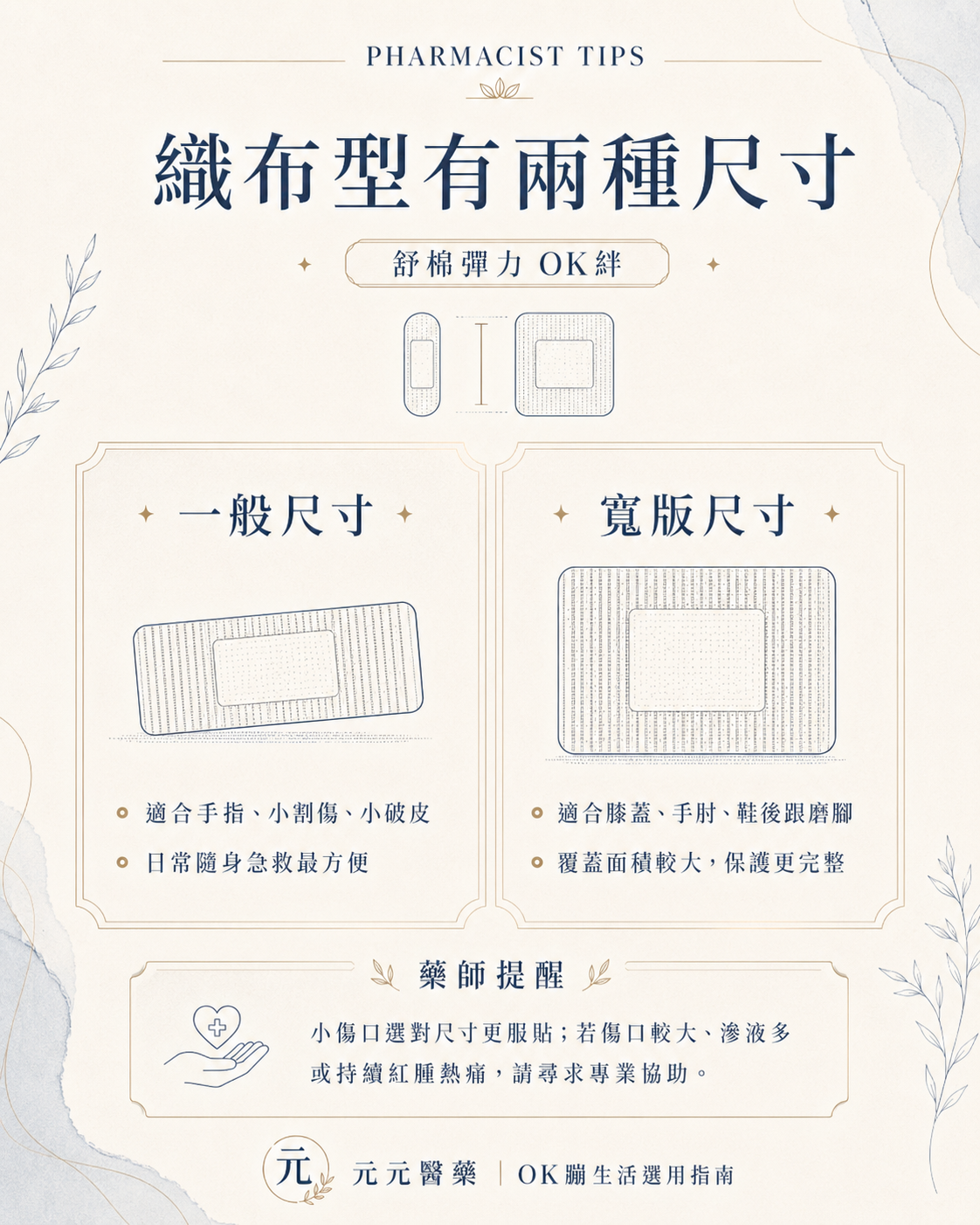
Fabric Bandages Come in Two Sizes: How to Choose?
Quick Match Guide
When a Bandage is Not Enough
If the wound shows signs of infection—such as increased pain, warmth, swelling, heavy discharge, or spreading redness—please seek professional medical care. Deep or dirty wounds may also require an evaluation for a tetanus booster shot.
- Wounds that are very deep or visibly gaping.
- Bleeding that does not stop.
- Foreign objects stuck inside the wound that cannot be easily washed out.
- Wounds caused by rusty metal, animal bites, or contaminated objects.
- Worsening redness, swelling, heat, or throbbing pain.
- Presence of pus, foul odor, or a running fever.
- Individuals with diabetes, weaker immune systems, or slow wound healing.
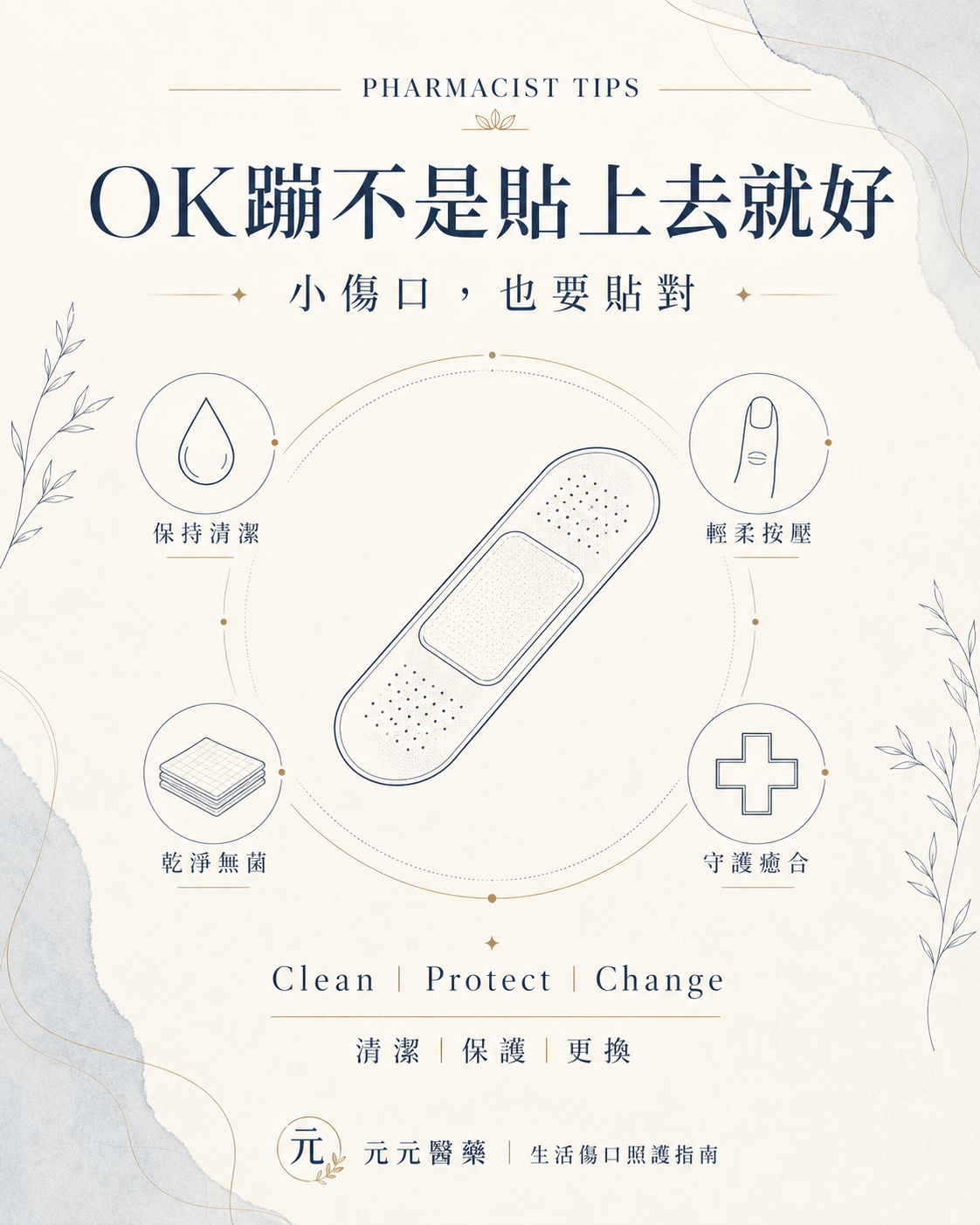
- Bandages protect clean wounds; they do not replace proper wound cleaning.
- Replace the bandage immediately if it gets wet, dirty, lifts up, or loses stickiness.
- For larger surface areas or heavy exudate, use sterile gauze or an appropriate advanced dressing.
- If redness, swelling, heat, pain worsens, or if pus or a fever develops, see a doctor or consult your pharmacist promptly.
Frequently Asked Questions
Q1: Can I keep a waterproof bandage on for days without changing it?
Not recommended. Waterproof bandages are only designed to reduce external moisture ingress. If the bandage lifts, leaks, becomes humid inside, gets dirty, or fluid builds up underneath, it must be changed.
Q2: What kinds of wounds are fabric bandages best for?
Fabric bandages are softer, more breathable, and elastic. They are ideal for flexible areas like fingers, knuckles, joints, knees, and elbows, as well as everyday minor cuts and abrasions.
Q3: Where should I use wide-sized bandages?
Wide-sized bandages are perfect for larger but shallow surface wounds like scraped knees, scraped elbows, chafed heels, and blistered ankles, providing full coverage protection.
Q4: Can I put a bandage straight onto a minor wound?
It is highly recommended to wash your hands first, clean the wound with running water or normal saline, make sure bleeding is under control, and wipe the surrounding skin dry before putting on a bandage.
Q5: When should I avoid relying solely on a bandage?
If the wound is deep, bleeding uncontrollably, contains unremovable debris, shows intensifying inflammation (redness/heat/pain), leaks pus, smells bad, or causes a fever, seek a pharmacist's or doctor's evaluation instead of just covering it up.
Q6: If my wound is weeping a lot, can I use a standard bandage?
If there is heavy fluid or the wound area is extensive, a standard bandage won't have enough absorption capacity or size coverage. Switch to sterile gauze or dedicated heavy-absorption wound dressings. Consult a pharmacist if unsure.
Yuan Yuan Pharmacy | Your Trusted Neighborhood Professional Pharmacy
Not sure what types of bandages, gauze, or dressings to keep in your home first-aid kit? Stop by any Yuan Yuan Pharmacy branch. Our professional pharmacists will help you build a practical wound care kit tailored to your family members and daily life needs.
Bandage Trivia
Not every adhesive bandage is the same. Choosing the right style for your daily scenario makes minor wounds much easier to care for.
Standard Waterproof Bandages
Ideal for minor wounds exposed to water for a short duration, such as during hand washing or housework.
For instance, choose a standard waterproof bandage for minor finger cuts, light scrapes on the back of the hand, or when going outdoors and worrying about dust and dirt contacting the wound.
Waterproof does not mean it can stay on forever. Replace it immediately if the edges lift, or if it gets leaky, damp, or dirty.
Fabric Bandages
Best for highly active areas like fingers, knuckles, knees, and elbows.
Fabric variants are generally softer, more breathable, and highly elastic. They conform tightly to joints that constantly bend or experience frequent friction.
Fabric - Regular Size
Designed for small and shallow wounds. This convenient size is perfect for on-the-go first aid for finger cuts, hangnails, and minor abrasions.
Fabric - Wide Size
Perfect for covering slightly larger, superficial surface injuries such as scraped knees, scraped elbows, heel blisters, or chafed ankles.
Quick Match Formula
Yuan Yuan Pharmacy | Pharmacist's Note
Bandages protect small wounds; they do not replace thorough wound cleaning. Please clean the wound before applying, and change the plaster if it gets wet, dirty, or peels off.